
Shaving vs. Waxing vs. Laser for Full Legs: Manhattan Guide
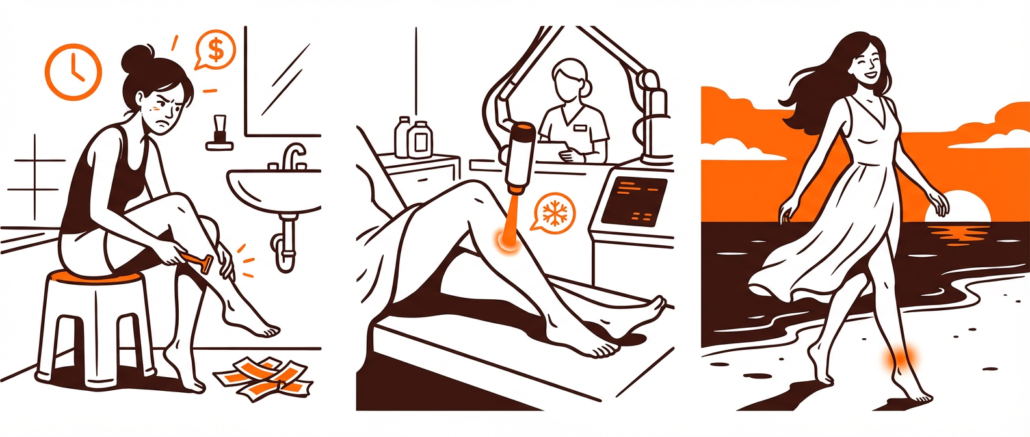
Women’s Full Legs Laser Hair Removal vs. Traditional Hair Removal: What Actually Works
If you’re spending hours each week shaving, waxing, or dealing with the aftermath of either, you’ve probably wondered whether there’s a better way. For busy professionals in Manhattan, the time and frustration of traditional hair removal adds up quickly—not to mention the ingrown hairs, razor burn, and the fact that you’re right back where you started within days.
Women’s full legs laser hair removal has become increasingly popular as a long-term solution, but how does it actually compare to the methods you’re already using? Manhattan Laser Centers has spent over 15 years helping clients understand their options, and the differences are more significant than most people realize.
The Real Cost of “Cheap” Hair Removal
Shaving: The Hidden Time Tax
Most women who shave their legs spend 10-15 minutes per session, 2-3 times per week. That’s roughly 100 hours per year—or more than four full days of your life.
The actual costs include:
- Razors and shaving cream: $150-300 annually
- Increased risk of cuts, nicks, and infections
- Razor burn and irritation on sensitive skin
- Ingrown hairs, particularly around knees and ankles
- Stubble returning within 24-48 hours
- Dry, flaky skin from repeated shaving
The convenience factor seems appealing until you calculate the cumulative time investment over a decade: that’s 1,000+ hours you’ll never get back.
Waxing: Painful and Temporary
Waxing offers longer-lasting results than shaving—typically 3-6 weeks—but comes with its own set of problems.
What you’re really signing up for:
- $80-150 per full leg waxing session
- $1,000-2,000 annually for regular maintenance
- Significant pain and discomfort during each appointment
- Potential for burns, especially with hot wax
- Ingrown hairs as hair grows back
- Need to let hair grow out between sessions (awkward timing)
- Possible skin lifting or bruising on sensitive areas
Many women tolerate waxing for years before realizing they’ve spent thousands of dollars on a solution that never actually solves the problem.
At-Home IPL Devices: Marketing vs. Reality
The market is flooded with at-home IPL (Intense Pulsed Light) devices promising “professional results.” The truth is more complicated.
IPL is not true laser technology. These devices use broad-spectrum light that’s significantly less powerful than medical-grade lasers, which means:
- Results are inconsistent and often disappointing
- Treatment takes much longer per session
- Many skin and hair types see minimal improvement
- Devices lose effectiveness over time
- No medical oversight or customization
If you’ve tried an IPL device or a Groupon laser deal with underwhelming results, you’re not alone. The technology simply isn’t comparable to FDA-cleared medical lasers like the Candela systems used in professional settings.
How Women’s Full Legs Laser Hair Removal Actually Works
True laser hair removal uses concentrated light energy that targets the melanin in hair follicles. The laser heats and damages the follicle without harming surrounding skin, preventing future hair growth.
The process typically involves:
- 6-8 treatment sessions spaced 4-8 weeks apart
- Each session takes 45-60 minutes for full legs
- Progressive reduction in hair growth after each treatment
- Finer, lighter regrowth between sessions
- Significant permanent reduction after completing the series
The key difference is in the equipment. Medical-grade lasers like the Candela GentleLase and GentleYAG deliver precise wavelengths at therapeutic power levels that actually work—something consumer devices and inferior pulsed light systems simply cannot replicate.
The Real Comparison: Long-Term Value
Let’s look at a realistic 10-year comparison for someone starting at age 30:
Shaving:
- Time investment: 1,000+ hours
- Financial cost: $2,000-3,000
- Ongoing commitment: Forever
- Skin damage: Cumulative irritation and scarring
Waxing:
- Time investment: 200+ hours (including appointments and travel)
- Financial cost: $10,000-20,000
- Ongoing commitment: Forever
- Pain factor: High, every single time
Professional Laser Hair Removal:
- Time investment: 6-10 hours total treatment time
- Financial cost: One-time investment (typically $2,000-4,000 for full legs)
- Ongoing commitment: Possible occasional touch-up every few years
- Comfort: Mild discomfort during treatment, none afterward
The math becomes clear when you extend the timeline. By year five, laser hair removal has typically paid for itself compared to waxing. By year ten, you’ve saved thousands of dollars and countless hours.
What to Expect: Women’s Full Legs Laser Hair Removal in Manhattan
Professional treatment should never feel rushed or pressured. Here’s what the experience should look like:
Initial Consultation:
- Thorough skin and hair assessment
- Transparent pricing with no hidden fees
- Realistic expectations about results and timeline
- Opportunity to ask questions without sales pressure
During Treatment:
- Cooling technology to minimize discomfort
- Customized settings for your skin type and hair color
- Experienced technicians who won’t rush through your appointment
- Clean, professional medical environment
After Treatment:
- Minimal downtime (slight redness for a few hours is normal)
- Clear aftercare instructions
- No wait times for follow-up appointments
- Refundable package options if you’re not satisfied
The difference between a good experience and a bad one often comes down to the provider’s experience and the quality of their equipment. Fifteen years of specialization matters when you’re trusting someone with your skin.
Who Is the Ideal Candidate?
Women’s full legs laser hair removal works best for individuals with:
- Dark hair and lighter skin (highest contrast for laser targeting)
- Realistic expectations about the process
- Commitment to completing the full treatment series
- No active skin infections or recent sun exposure
That said, advances in laser technology now allow treatment for a much wider range of skin tones than was possible even a decade ago. The GentleYAG laser, for example, is specifically designed for darker skin types.
If you’ve been told in the past that you’re not a candidate, it’s worth getting a second opinion from a provider with multiple laser systems and extensive experience treating diverse skin types.
Making the Switch: What You Need to Know
If you’re considering transitioning from shaving or waxing to laser hair removal, timing matters:
- Stop waxing or plucking 4-6 weeks before your first treatment (the laser needs the hair follicle intact)
- Shaving is fine—and actually required—right before treatment
- Avoid sun exposure and tanning for 4 weeks before and after sessions
- Plan your first session when you can avoid major events for a few days (though most people have no visible side effects)
Most clients report that their only regret is not starting sooner. The freedom from daily or weekly hair removal routines is consistently described as life-changing, particularly for those with sensitive skin or chronic ingrown hairs.
Why Equipment and Experience Matter
Not all laser hair removal is created equal. The provider you choose makes an enormous difference in your results and safety.
Red flags to watch for:
- Groupon deals or unusually low pricing (often indicates IPL, not true laser)
- High-pressure sales tactics or package requirements
- Inexperienced staff or high turnover
- Vague answers about equipment brands and certifications
- Rushed appointments with long wait times
What to look for instead:
- FDA-cleared medical-grade lasers (Candela, Cynosure, Lumenis)
- Experienced, certified technicians
- Transparent pricing and refundable packages
- No-pressure consultations
- Consistent positive reviews mentioning results, not just customer service
The difference between disappointing results and genuinely life-changing outcomes often comes down to these factors.
Your Next Step
If you’re tired of the endless cycle of shaving or the expense and pain of waxing, it’s time to explore a permanent solution. Women’s full legs laser hair removal offers the long-term freedom that traditional methods simply cannot provide.
Manhattan Laser Centers offers complimentary consultations with no obligation and no pressure—just honest answers to your questions and a clear assessment of what results you can realistically expect. With over 15 years of experience, FDA-cleared Candela lasers, and a commitment to transparency, you’ll get the expertise you deserve without the sales tactics you don’t.
Ready to reclaim your time and confidence? Schedule your free consultation today and discover what life looks like without the constant hassle of unwanted hair.
Frequently Asked Questions
How many sessions does women’s full legs laser hair removal typically require?
Most clients need 6-8 sessions spaced 4-8 weeks apart to achieve optimal results. Hair grows in cycles, and the laser can only effectively treat hair in the active growth phase. This is why multiple sessions are necessary—you’re targeting different hair follicles as they enter the growth phase. Some individuals may need additional touch-up sessions depending on their hair type, hormonal factors, and how their body responds to treatment. During your consultation, you’ll receive a personalized estimate based on your specific hair and skin characteristics.
Is laser hair removal painful compared to waxing?
Most people describe laser hair removal as significantly less painful than waxing. The sensation is often compared to a rubber band snap followed by a cooling sensation. Modern medical-grade lasers include built-in cooling technology that protects the skin and minimizes discomfort during treatment. While waxing involves ripping hair from the follicle (which many find excruciating), laser treatment delivers quick pulses that most clients tolerate easily. Sensitive areas like the back of the knees may be slightly more uncomfortable, but the entire process is generally well-tolerated, and discomfort ends immediately when the treatment is complete.
Can I shave between laser hair removal sessions?
Yes, you can and should shave between sessions. In fact, you’ll need to shave the treatment area 24 hours before each appointment. Shaving removes the hair above the skin while leaving the follicle intact, which is exactly what the laser needs to target. What you cannot do is wax, pluck, or use depilatory creams between sessions, as these methods remove the entire hair follicle, leaving nothing for the laser to target. As you progress through your treatment series, you’ll notice that you need to shave less frequently because hair growth slows down significantly between sessions.