
Men’s Bikini Line Laser in Manhattan: Your Essential Checklist
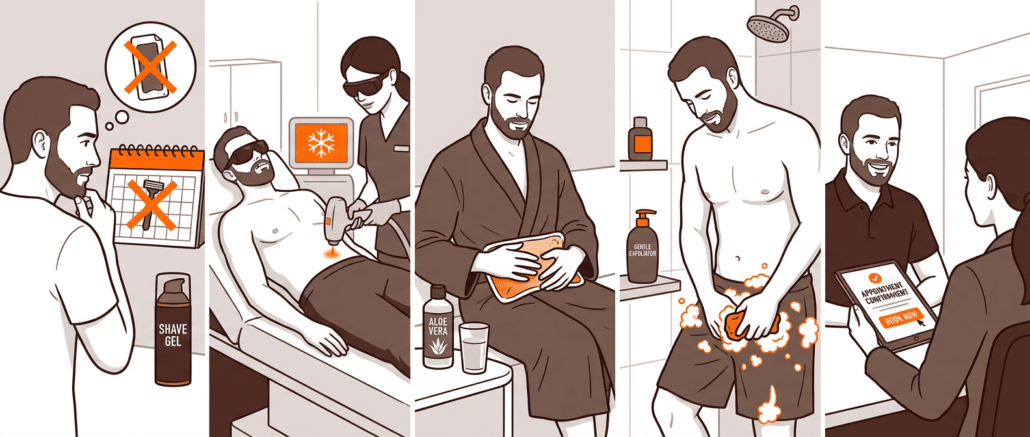
Before Your First Session: What to Know
Shaving your bikini line daily is tedious. Waxing is painful and expensive over time. If you’re considering a permanent solution, men’s bikini line laser hair removal offers a way to eliminate ongoing maintenance while addressing common issues like ingrown hairs and irritation. At Manhattan Laser Centers, we’ve spent over 15 years helping clients achieve smooth, confident results with FDA-cleared Candela lasers—no gimmicks, no pressure.
This checklist walks you through everything you need to know before, during, and after your treatment so you can make an informed decision and get the best possible results.
Pre-Treatment Checklist: 2–4 Weeks Before
Stop Waxing, Plucking, or Threading
Laser targets the hair follicle beneath the skin. If you’ve removed the root through waxing or plucking, there’s nothing for the laser to target. Shave only during this period.
Avoid Sun Exposure and Tanning
Tanned or sunburned skin increases the risk of complications. Skip tanning beds, self-tanners, and prolonged sun exposure for at least two weeks before your appointment.
Discontinue Certain Medications and Products
Some medications and topical products increase photosensitivity:
- Antibiotics (tetracycline, doxycycline)
- Retinoids (tretinoin, Retin-A)
- Acne treatments with benzoyl peroxide or salicylic acid
- Blood thinners (consult your provider)
Discuss your current medications during your consultation to avoid adverse reactions.
Schedule a Consultation
A proper consultation ensures you’re a good candidate and sets realistic expectations. During your visit, expect:
- Skin type assessment (Fitzpatrick scale)
- Medical history review
- Discussion of treatment areas and goals
- Transparent pricing with no hidden fees
- Patch test if needed
24–48 Hours Before Your Appointment
Shave the Treatment Area
Shave the bikini line 12–24 hours before your session. The hair should be short enough that the laser energy focuses on the follicle rather than burning surface hair, but not so freshly shaved that you experience razor burn during treatment.
Skip Lotions, Deodorants, and Fragrances
Come to your appointment with clean, product-free skin. Lotions and oils can interfere with laser penetration and increase the risk of burns.
Wear Comfortable, Loose Clothing
You’ll want breathable, loose-fitting underwear and pants. Tight clothing can irritate freshly treated skin.
Hydrate and Avoid Alcohol
Well-hydrated skin responds better to treatment. Avoid alcohol 24 hours before, as it can thin the blood and increase sensitivity.
What to Expect During Men’s Bikini Line Laser Hair Removal in Manhattan
The Process
Your technician will:
- Cleanse the treatment area
- Apply a cooling gel (if using certain laser settings)
- Provide protective eyewear
- Perform test pulses to gauge your skin’s response
- Systematically treat the entire bikini line area
Sensation
Most clients describe the feeling as a rubber band snap followed by warmth. Modern Candela lasers include built-in cooling mechanisms that minimize discomfort. The bikini line is more sensitive than areas like the back or legs, but most men tolerate it well without numbing cream.
Duration
A typical session lasts 15–30 minutes depending on the size of the treatment area. We don’t rush appointments—you’ll receive thorough, unhurried care.
Immediate Aftercare: First 24–48 Hours
Expect Redness and Sensitivity
Mild redness, swelling, and a sunburn-like sensation are normal. These typically subside within a few hours to two days.
Apply Cold Compresses
Use a clean, cool compress or ice pack wrapped in a towel to soothe the area. Avoid direct ice contact with skin.
Use Gentle, Fragrance-Free Products
Stick to mild, unscented cleansers and moisturizers. Avoid products with alcohol, retinoids, or exfoliating acids for at least 48 hours.
Avoid Heat and Friction
Skip these for 24–48 hours:
- Hot showers, baths, saunas, or steam rooms
- Intense workouts that cause excessive sweating
- Tight underwear or pants
- Sexual activity (if it causes friction in the treated area)
No Sun Exposure
Treated skin is vulnerable to hyperpigmentation. Avoid direct sun exposure and apply SPF 30+ if you’ll be outdoors, even if the area is typically covered.
Ongoing Care Between Sessions
Shave Only—Never Wax or Pluck
Between sessions, shaving is the only acceptable hair removal method. Waxing or plucking disrupts the hair growth cycle and undermines your results.
Exfoliate Gently
After the first week post-treatment, gentle exfoliation 2–3 times per week helps prevent ingrown hairs as treated hair sheds. Use a soft washcloth or mild scrub—nothing abrasive.
Moisturize Daily
Hydrated skin responds better to subsequent treatments. Use a fragrance-free, non-comedogenic moisturizer.
Avoid Active Ingredients Before Your Next Session
Pause retinoids, AHAs, BHAs, and other active skincare ingredients 3–5 days before your next appointment.
How Many Sessions Will You Need?
Hair grows in cycles, and laser only affects follicles in the active growth phase. Most men need 6–8 sessions spaced 4–6 weeks apart for optimal results. Factors that influence your treatment plan include:
- Hair color and thickness (darker, coarser hair responds best)
- Skin tone
- Hormonal factors
- Treatment area size
You’ll notice progressive reduction after each session, with some hair shedding within 1–3 weeks post-treatment.
Red Flags: When to Contact Your Provider
While side effects are typically mild, contact your provider if you experience:
- Blistering or crusting
- Severe pain that doesn’t improve with over-the-counter pain relief
- Signs of infection (pus, increasing redness, fever)
- Hyperpigmentation that doesn’t fade within a few weeks
Choosing a reputable provider with medical-grade equipment significantly reduces these risks.
Why Equipment and Expertise Matter
Not all laser hair removal is created equal. IPL (Intense Pulsed Light) devices and discount chains often use lower-quality equipment that delivers inconsistent results or requires more sessions. True medical-grade lasers—like the FDA-cleared Candela systems we use—offer:
- Precise wavelength targeting for effective follicle destruction
- Built-in cooling for comfort
- Adjustable settings for different skin types
- Proven safety profiles
Experience matters too. Technicians should understand how to adjust settings based on your skin type, hair characteristics, and response to treatment.
Men’s Bikini Line Laser Hair Removal: Manhattan’s Trusted Choice
If you’re ready to eliminate the daily hassle of shaving and the discomfort of ingrown hairs, laser hair removal offers a long-term solution. Our team has over 15 years of experience treating all skin types in a judgment-free, professional environment. We believe in transparent pricing, no-pressure consultations, and giving you the time and attention you deserve.
Check out our full range of services and pricing at our pricing page to see how we can help you achieve your grooming goals.
Ready to get started? Book your consultation today—no spam, no hidden fees, just honest expertise and real results.
Frequently Asked Questions
Is men’s bikini line laser hair removal painful?
Most men describe the sensation as tolerable—similar to a rubber band snap followed by warmth. The bikini line is more sensitive than areas like the chest or back, but modern medical-grade lasers include cooling mechanisms that significantly reduce discomfort. If you’re concerned about sensitivity, discuss options with your provider during your consultation.
How long does it take to see results?
You’ll notice treated hair beginning to shed 1–3 weeks after your first session. Significant reduction becomes visible after 2–3 treatments, with optimal results achieved after 6–8 sessions. Remember that hair grows in cycles, so multiple sessions are necessary to target all follicles during their active growth phase.
Can I work out after my treatment?
Avoid intense exercise for 24–48 hours post-treatment. Sweating and friction can irritate freshly treated skin and increase the risk of complications. Light activity is generally fine, but skip the gym, hot yoga, and activities that cause excessive perspiration or rubbing in the treatment area.